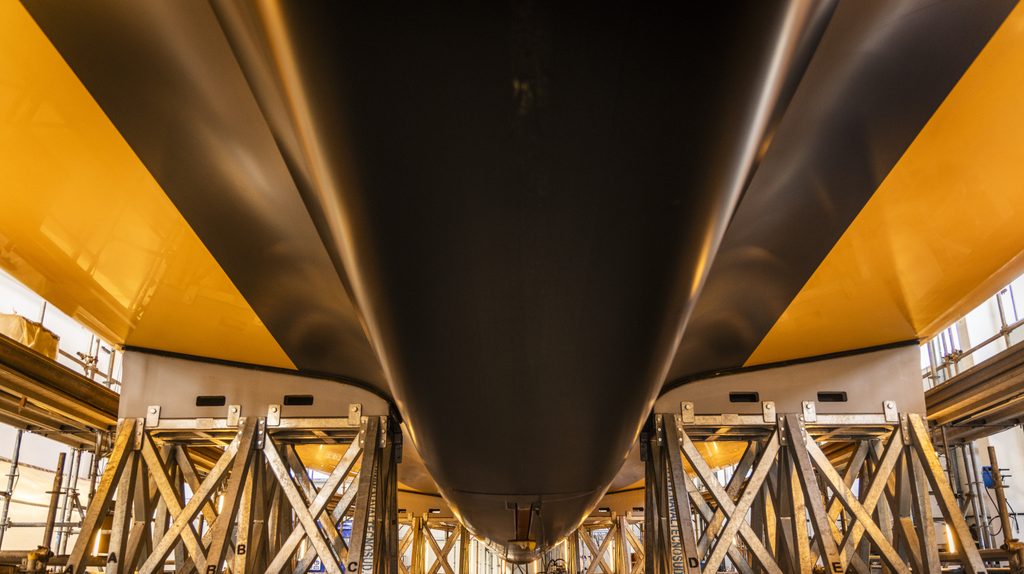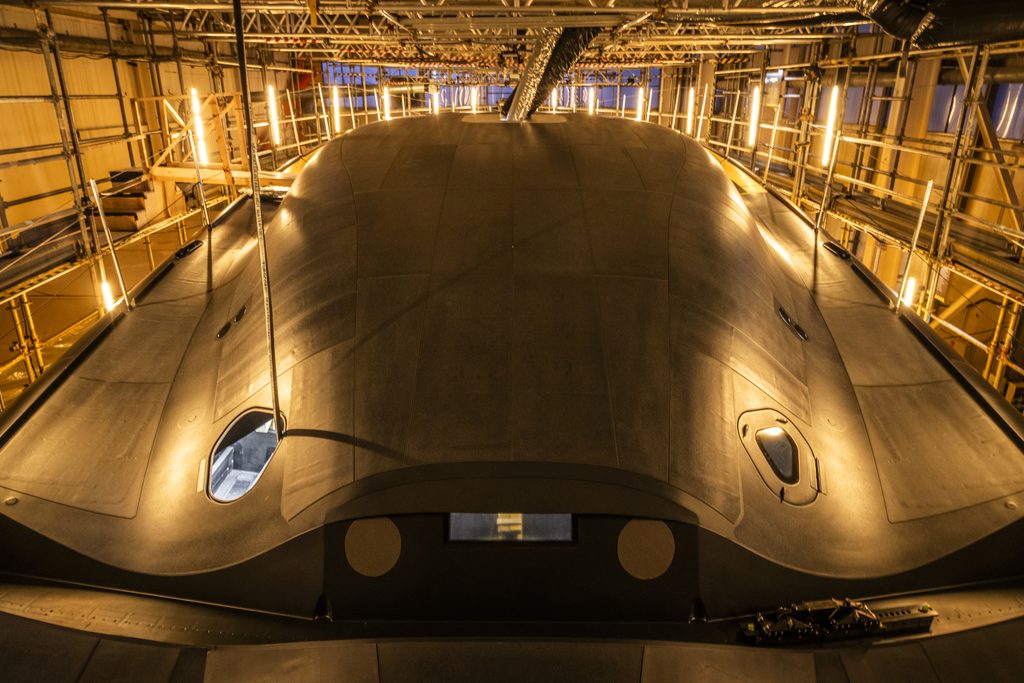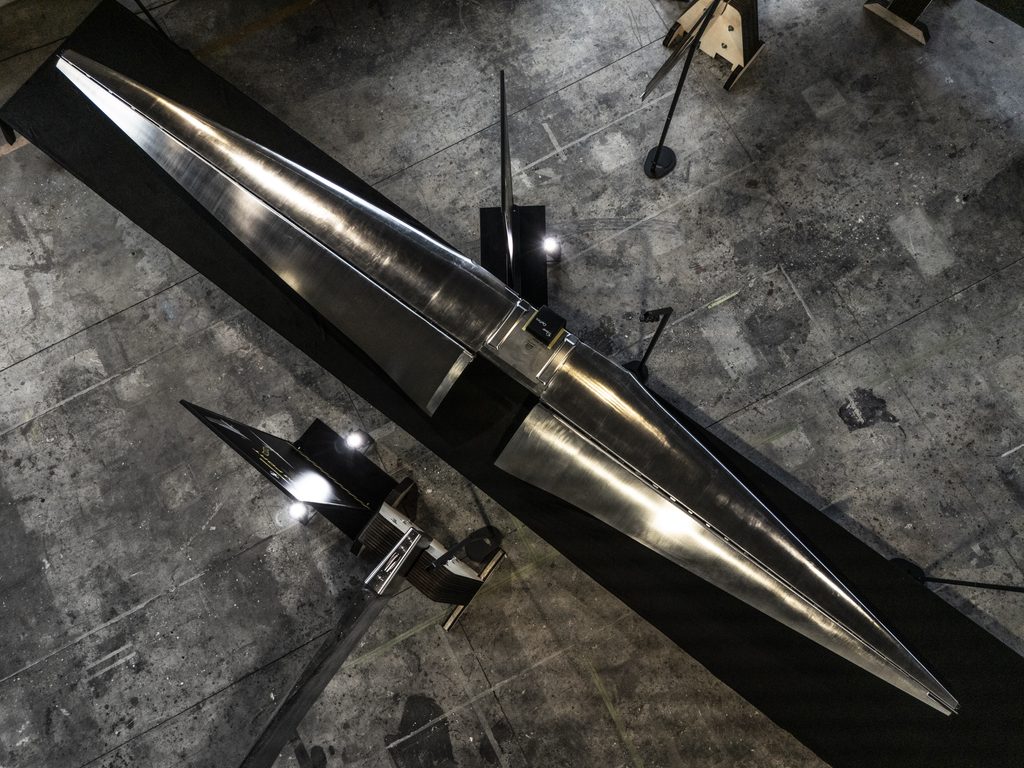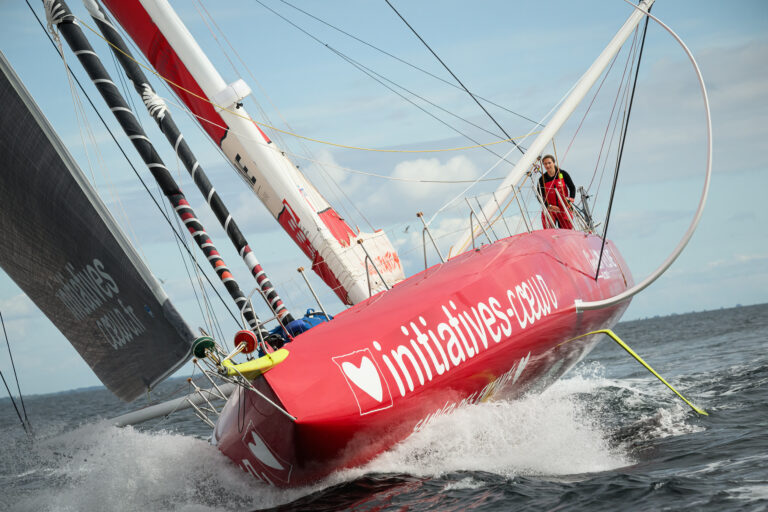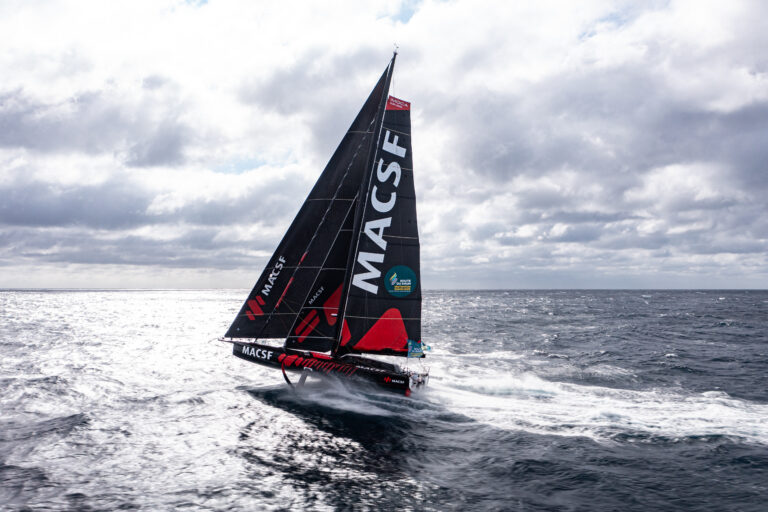

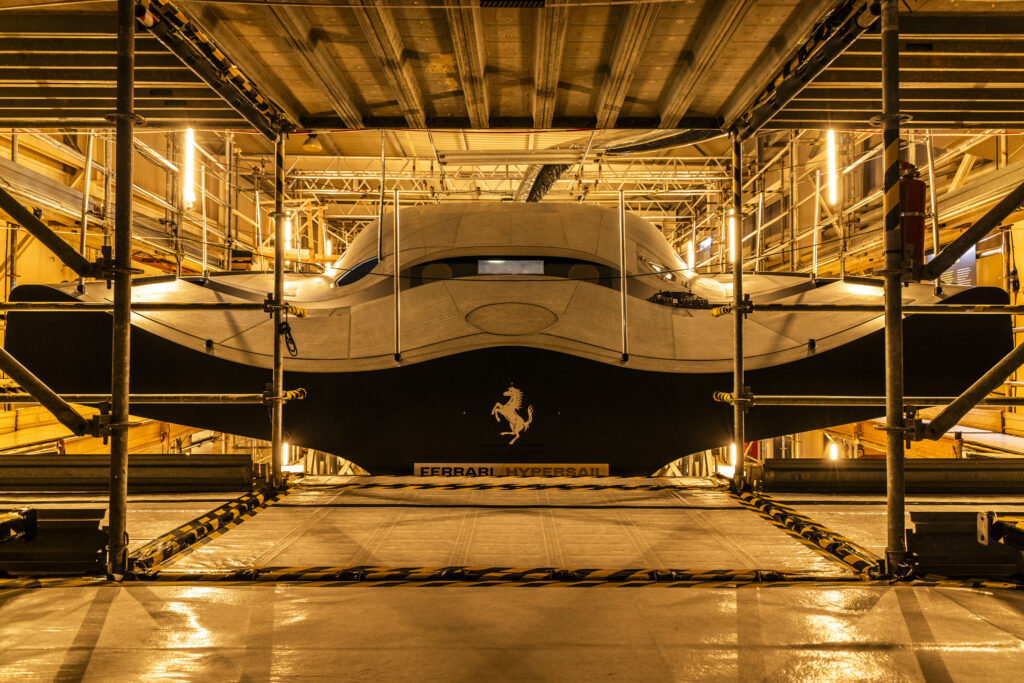
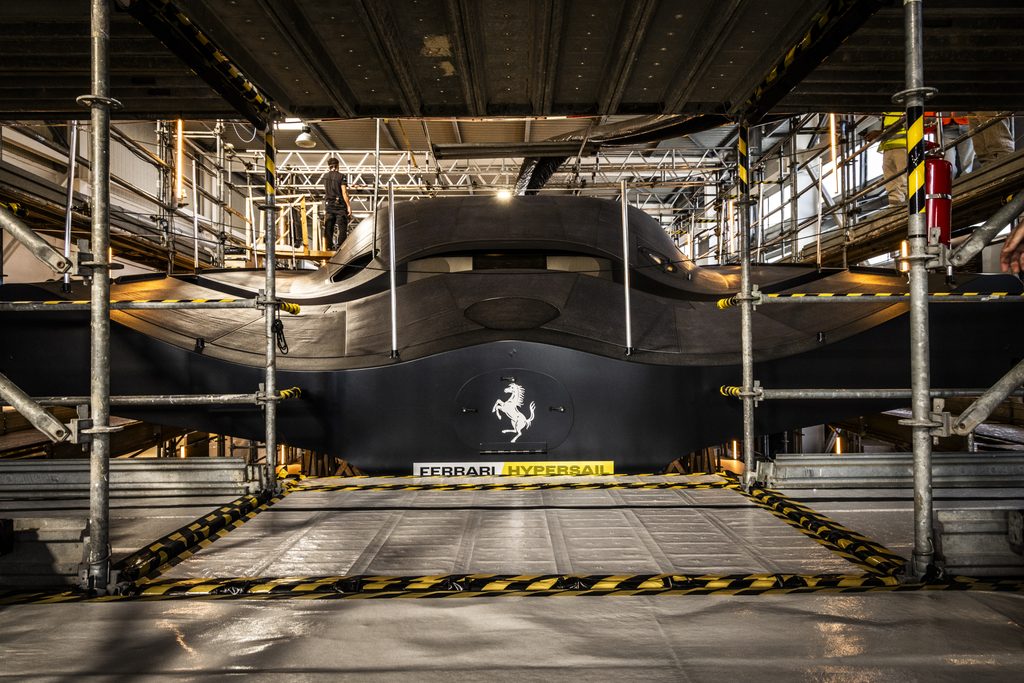
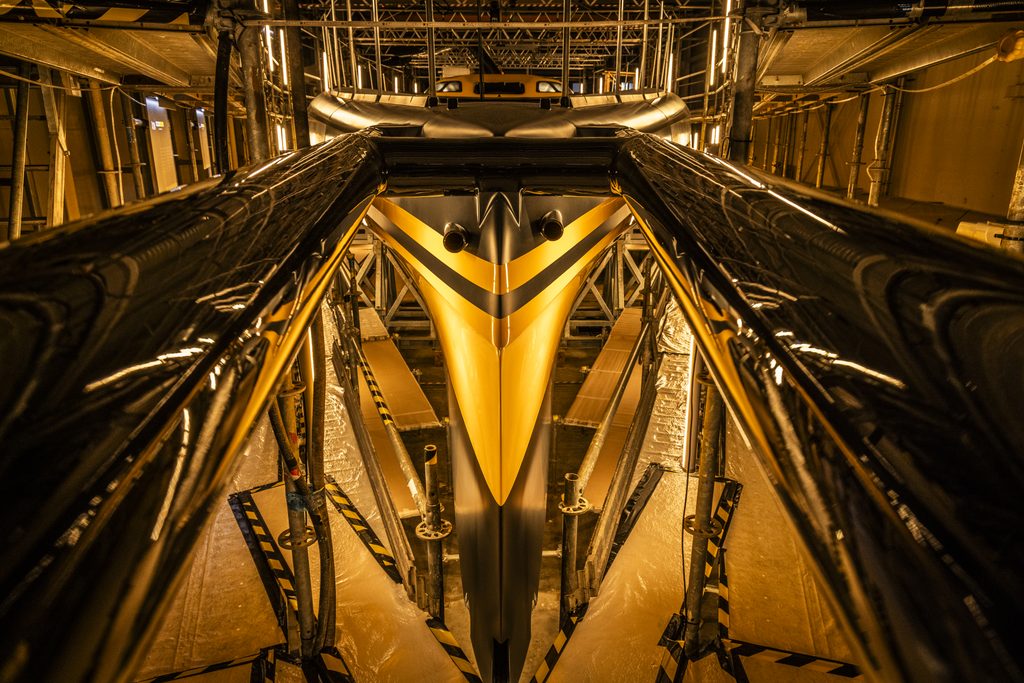
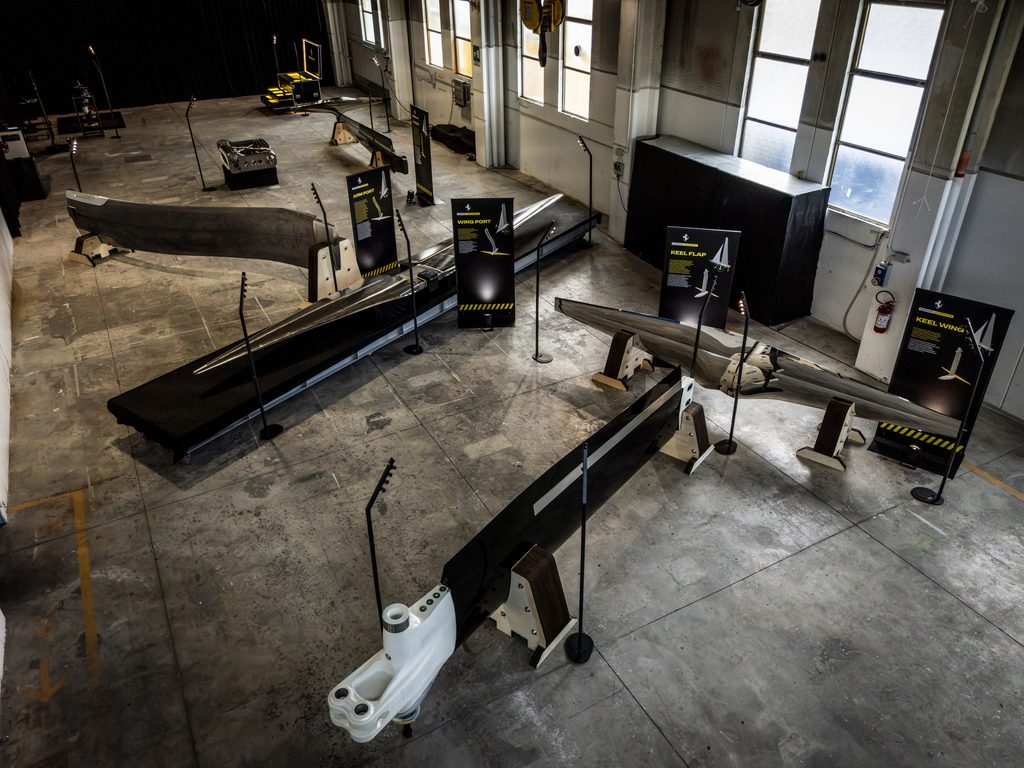
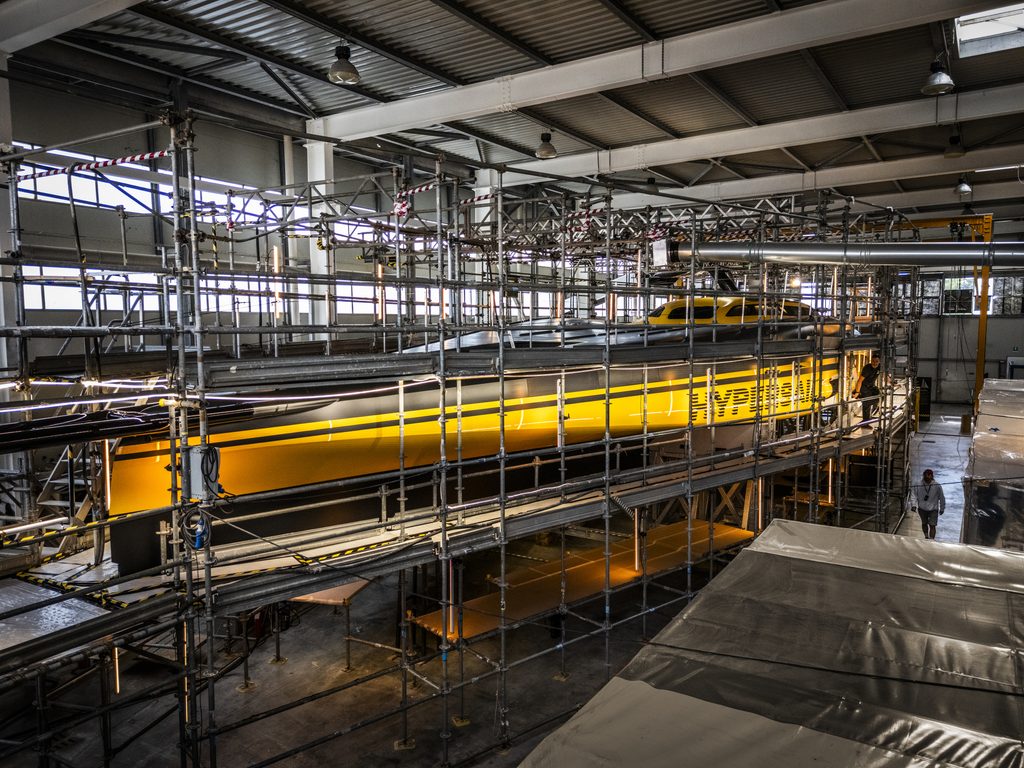
Ferrari Hypersail has entered the final phase of construction. The hull of the 100-foot flying monohull is now fully painted and the livery is complete. The appendages, the underwater elements that will lift the boat above the sea, are also in the shipyard.
The project is preparing for its next operational phase. The technology that will allow Hypersail to fly above the water has also been revealed.
How it flies
Hypersail will rely on three appendages below the water: foils, keel and rudder. Together they generate lift, manage balance and respond to changing sea conditions.
The foils act as side wings. They create the upward force needed to raise the hull above the surface, reducing drag and helping the boat reach its target speed.
The keel carries a foil with its own movable flap. That flap helps manage flight and creates a third support point, improving stability while the boat is airborne.
The rudder does more than steer. A small movable wing on its vertical section makes continuous adjustments to keep the boat on its target heading.
Flight Control
Flight Control is the electronic system at the centre of the project. Ferrari describes it as the central nervous system of Hypersail, built on know-how from the company’s automotive electronics and dynamic control work.
The system manages the boat’s trim during flight. It continuously analyses wind, waves, speed and heel angle, then adjusts the boat in real time to maintain stability and performance.
The process has three stages. Sensors around the vessel measure sea state and hull movement. An onboard computer analyses the data and calculates the corrections. Actuators then move the components that control the angle of the foils and appendages.
The crew remains central. Ferrari says the software is designed to handle tasks that can be automated, allowing sailors to focus on reading the sea, making strategic decisions and pursuing maximum performance.
Carbon fibre and titanium
Flight Control and the appendages depend on a structure strong enough to handle the loads of flying. Hypersail’s hull is built from multiple layers of carbon fibre, combining lightness with high rigidity.
In the areas under the greatest stress, including the foil arms and mainsail traveller, Ferrari uses a sandwich construction of carbon fibre and titanium. The company says the material combination is borrowed directly from its sports cars.
Maranello to the ocean
Ferrari developed Hypersail entirely in-house. The project has produced more than 20 patents, including Winch by Wire, extended-range wind turbines and an MV/HV system for renewable energy integration.
Other innovations include a rotating mast fitted with winglets and a double-skin mainsail. Both are designed to improve sail control and handling.
Ferrari sees a direct link between a sports car and a flying monohull. Both require aerodynamic efficiency and electronic systems capable of detecting and correcting changes in behaviour. Hypersail is Ferrari’s attempt to take that engineering culture from Maranello to the ocean.